Automation readiness guide
The best first automation is rarely the most complex workflow. It is usually repetitive, stable, low-value manual work with results that are easy to verify.
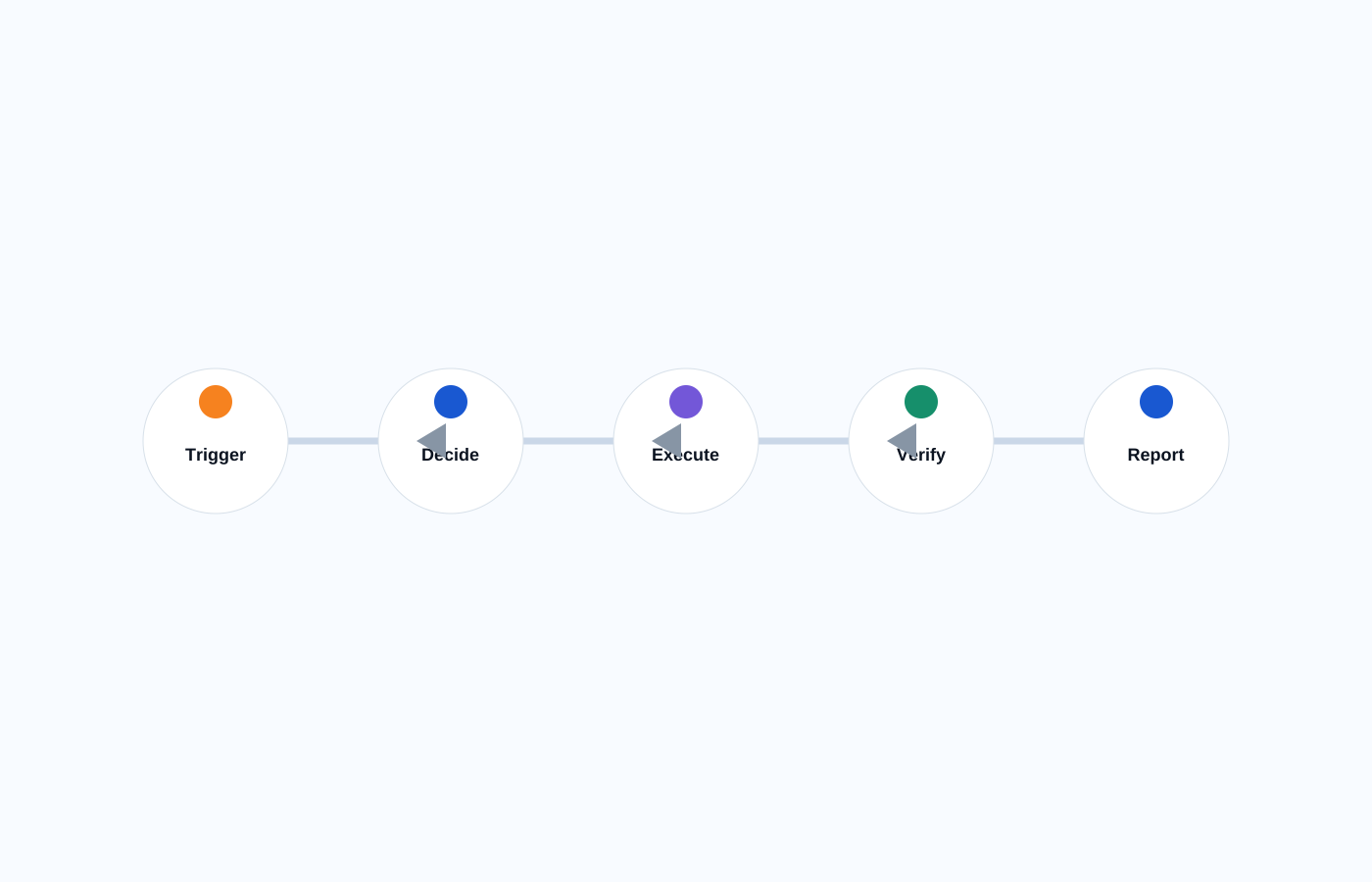
Confirm the process deserves automation first.
If rules change every day, nobody agrees on the workflow and input data is unreliable, automation only moves confusion faster. Evaluate frequency, rules, inputs and exceptions before building.
Frequency
The same steps repeat daily or weekly.
Clear rules
Most cases can be described with explicit conditions.
Stable inputs
Forms, data and triggers are reliable enough.
Defined exceptions
The team knows when the workflow should stop and ask a person.
Typical scope
Understand the current workflow
Map current tools, people, data and the real bottleneck.
Ship the useful core
Deliver the highest-value part that can be verified quickly.
Expand after real use
Add features, automation and integrations based on real usage.
Common questions
What should we automate first?
Choose repetitive, rule-based, low-risk work with outcomes that are easy to verify.
How is AI automation different from normal automation?
Rule-based automation handles deterministic steps; AI is more useful for classification, extraction and summarization of unstructured inputs.
Start with one concrete problem.
Tell us where the work is slow, error-prone or hard to manage. We will suggest a practical first phase.