Business management systems
When spreadsheets, chat threads and disconnected tools stop agreeing with each other, the real need is often a shared operating model—not simply a larger software package.
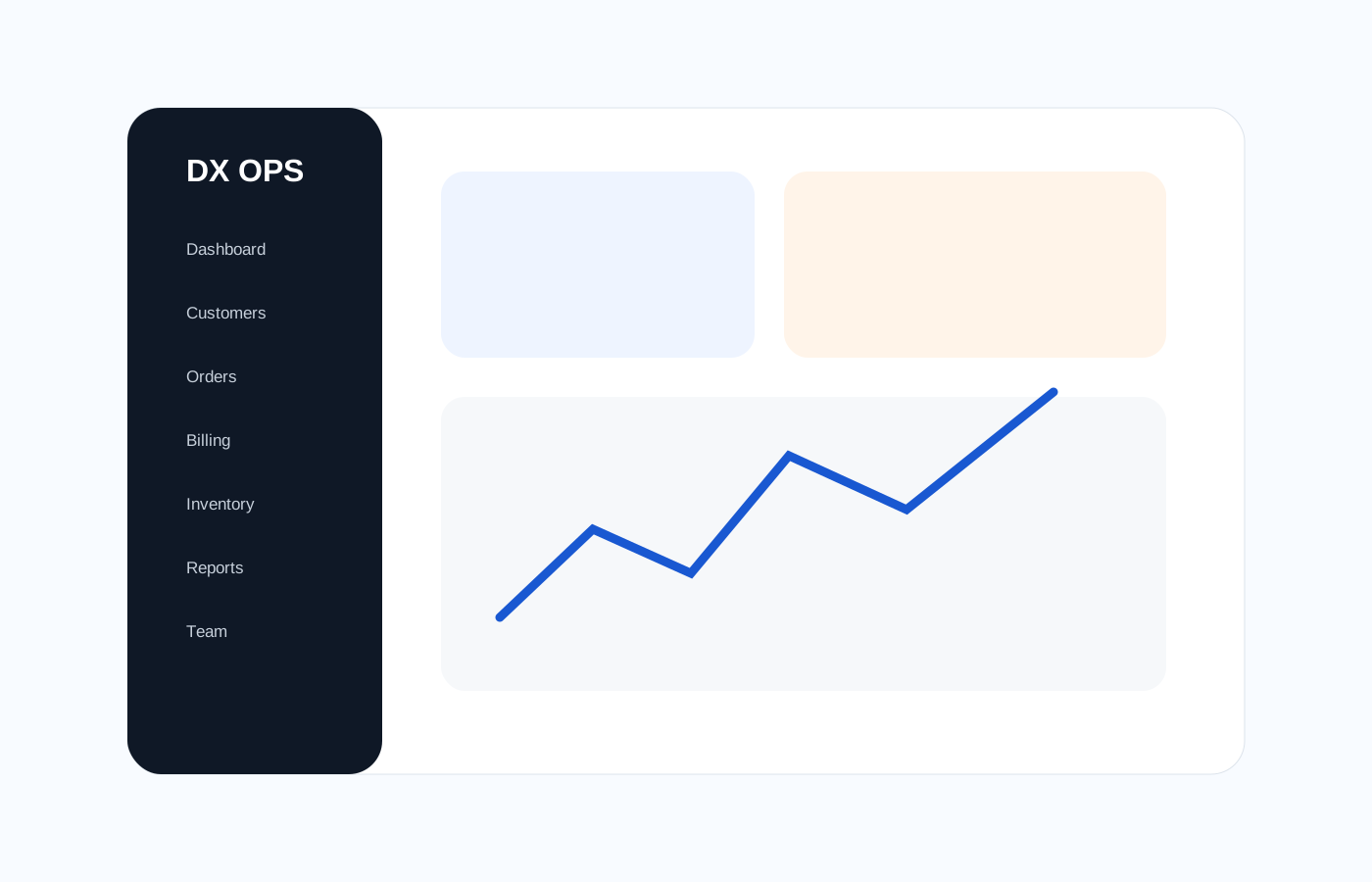
The system should follow the business, not the other way around.
We define roles, states, data relationships and daily actions first. A project can begin with one customer or order module and expand after the team is actually using it.
Customers
Keep records, follow-up, tags and ownership in one place.
Orders
Make the path from estimate to completion visible and consistent.
Billing
Track receivables, payments, invoices and exceptions.
Inventory
Know what is available, what is low and what needs action.
Staff and access
Define roles, visibility, scheduling and approvals.
Reporting
Give management reliable operating data without rebuilding spreadsheets every week.
Typical scope
Understand the current workflow
Map current tools, people, data and the real bottleneck.
Ship the useful core
Deliver the highest-value part that can be verified quickly.
Expand after real use
Add features, automation and integrations based on real usage.
Common questions
Do we need to build the whole system at once?
No. Starting with the highest-value modules usually reduces risk and speeds adoption.
Can you migrate spreadsheet data?
Yes, after cleaning fields, duplicates and data rules so old problems are not copied into the new system.
Can it integrate with our current payment or CRM tools?
Usually, when stable APIs or data interfaces are available.
Start with one concrete problem.
Tell us where the work is slow, error-prone or hard to manage. We will suggest a practical first phase.