AI agents and digital employees
AI becomes operational only when it understands business context, knows what tools it may use, and has clear limits around consequential actions.
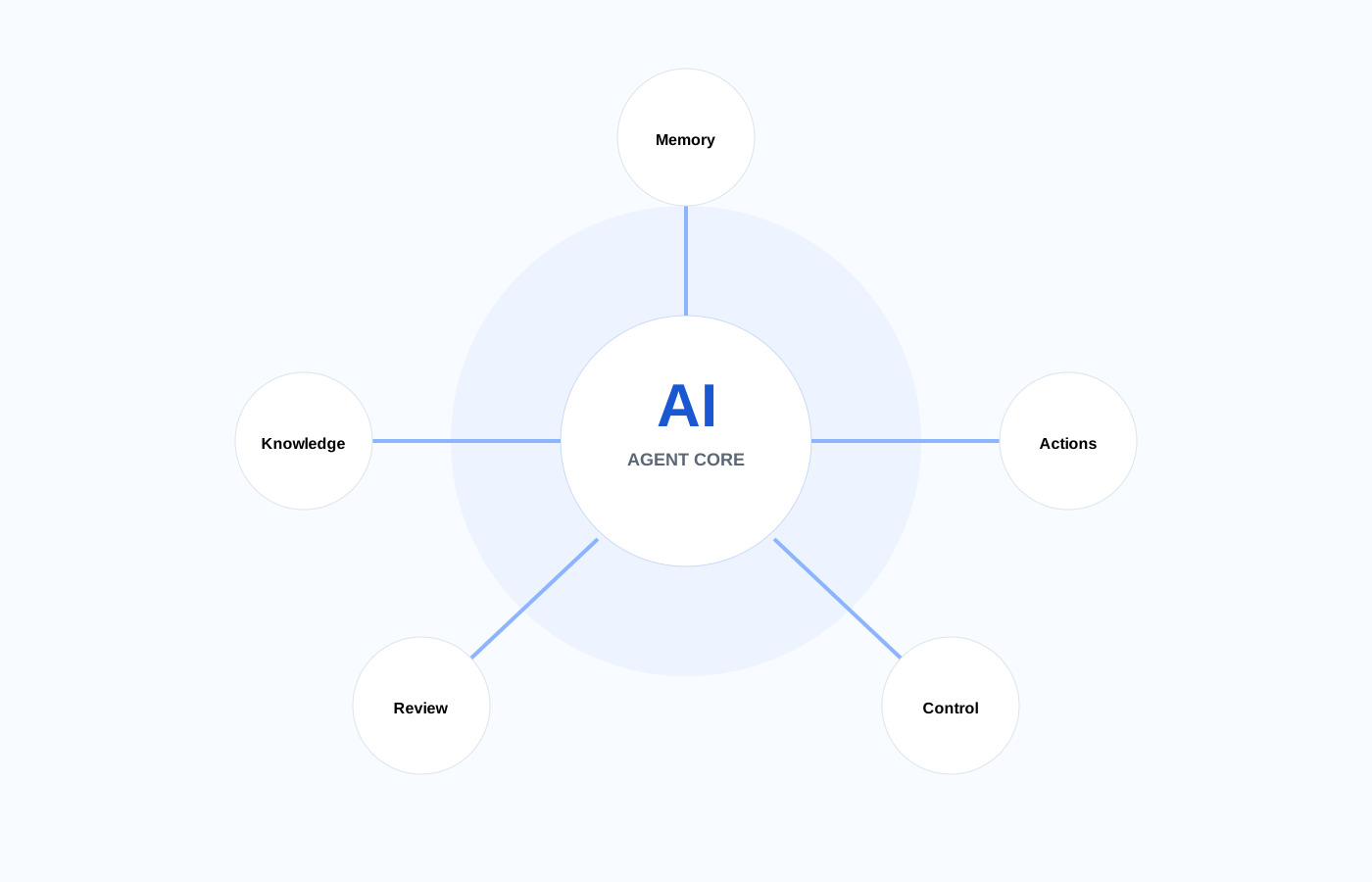
Define the role before choosing the model.
We start with the job: what the agent reads, what it decides, which tools it can use, what it must record, and where a person stays in control. The model is one component of that system.
Business knowledge
Connect product, customer, policy and process information with clear sources.
Useful memory
Retain relevant context without treating every conversation as permanent truth.
Tool access
Connect email, calendar, CRM and business systems within defined permissions.
Approvals
Keep payments, deletions, external messages and permission changes reviewable.
Audit trail
Record what information was used, what action was taken and why.
Human handoff
Route uncertain, unusual or high-impact work back to a person.
Typical scope
Understand the current workflow
Map current tools, people, data and the real bottleneck.
Ship the useful core
Deliver the highest-value part that can be verified quickly.
Expand after real use
Add features, automation and integrations based on real usage.
Common questions
Will an agent make important decisions on its own?
Not by default. High-impact actions can remain suggestions, drafts or approval requests.
Can it use our existing company information?
Yes, through knowledge sources, documents, databases and existing APIs.
Is the goal to replace staff?
Usually not. Many projects focus on repetitive research, organization and follow-up while people keep judgment and relationships.
Start with one concrete problem.
Tell us where the work is slow, error-prone or hard to manage. We will suggest a practical first phase.