Internal operations
When teams constantly ask which file is current, who handled the task or where a status lives, the operating model needs attention.
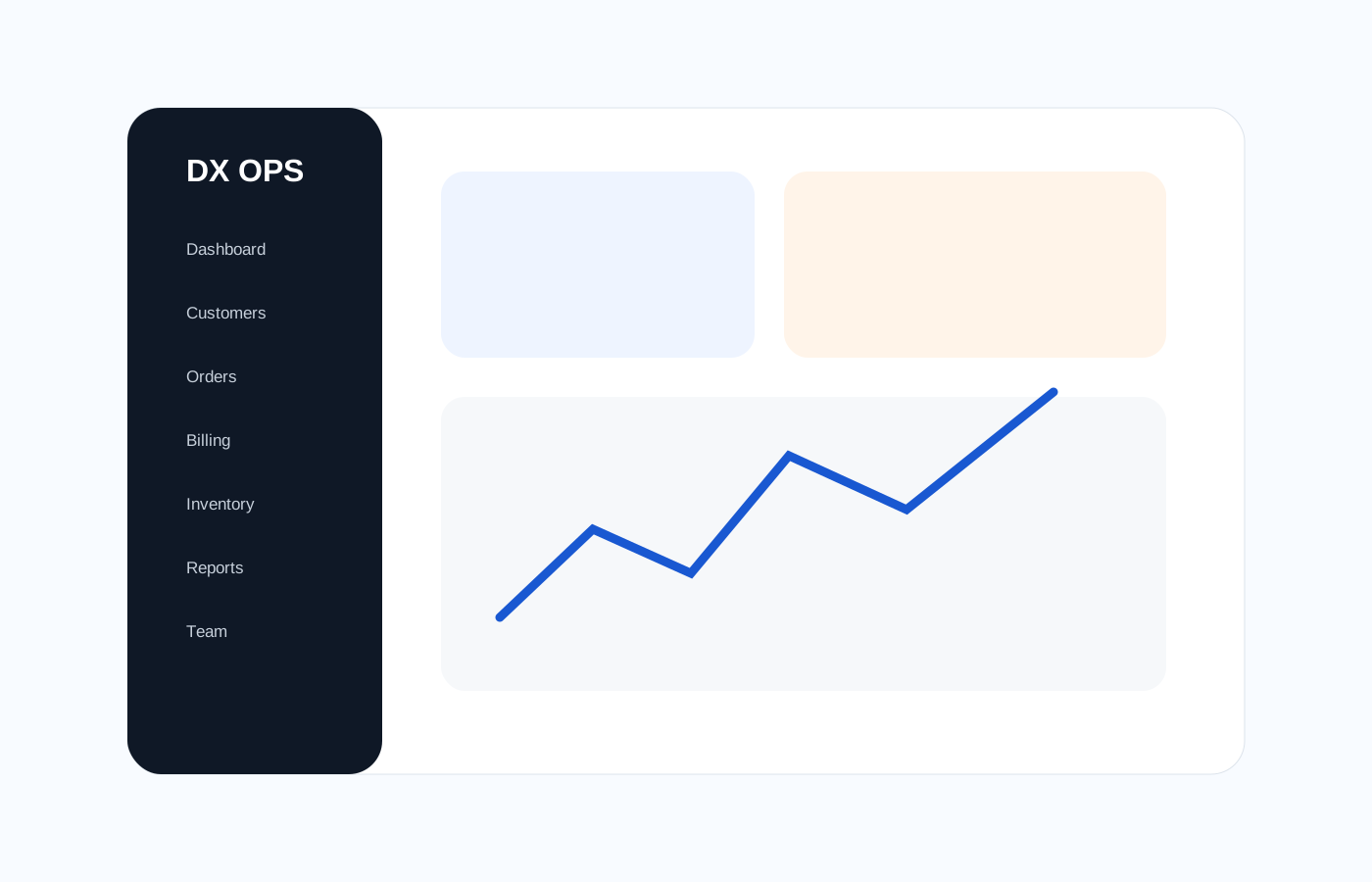
Fix unclear state before adding more features.
An internal system should make current state, next action and ownership obvious. We start from the spreadsheets, chat threads and tools already in use and reduce duplicate entry first.
Shared state
Give customers, orders and tasks a reliable current status.
Ownership
Make responsibility and next action visible.
Less re-entry
Move existing data through integrations instead of repeated copy-and-paste.
Management view
Focus reports on the few operating signals that matter.
Typical scope
Understand the current workflow
Map current tools, people, data and the real bottleneck.
Ship the useful core
Deliver the highest-value part that can be verified quickly.
Expand after real use
Add features, automation and integrations based on real usage.
Common questions
Do we have to replace every existing tool?
No. Many projects begin by connecting important data and replacing only the weakest parts.
Is this useful for smaller teams?
Yes when process complexity has outgrown memory, spreadsheets and chat.
Start with one concrete problem.
Tell us where the work is slow, error-prone or hard to manage. We will suggest a practical first phase.